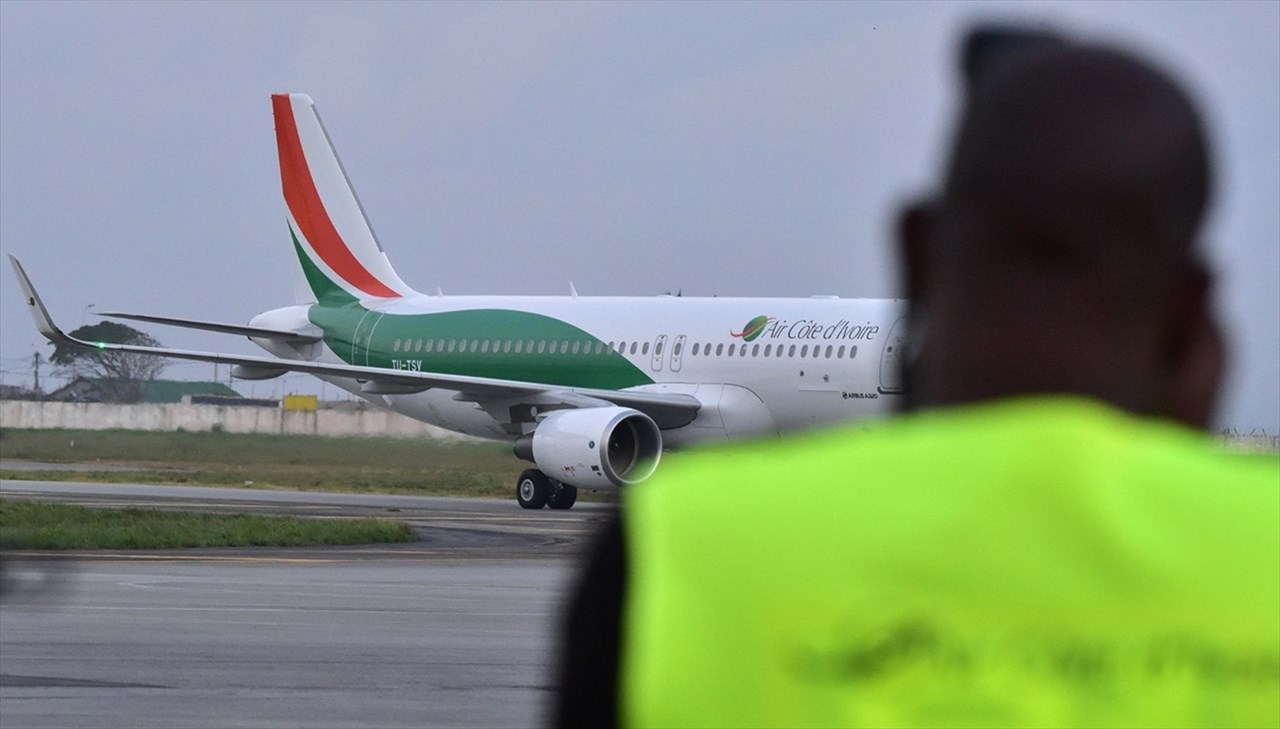
What if the next plane to depart Abidjan ran partly on cassava ethanol? The idea, which would have drawn smiles a few years ago, is now supported by a technical dossier.
On 3 September 2026, the National Civil Aviation Authority (ANAC) unveiled the findings of a commercial feasibility study dedicated to Sustainable Aviation Fuels (CAD, or Sustainable Aviation Fuels – SAF in English), these substitute fuels for fossil kerosene, produced from biomass or waste, which reduce the carbon footprint of flights. A first liter expected by 2028-2029.
Conducted under the ACT-SAF program of the International Civil Aviation Organization (OACI), with the support of France, the study outlines the roadmap for initial national production by 2028-2029. Attention is focused on cassava and the ethanol that can be derived from it, a pathway that would allow for the utilization of currently under-exploited agricultural residues.
A market driven by traffic growth. The economic calculation is based on demand projected to soar.
Abidjan airport handled 2,55 million passengers in 2025, and the International Air Transport Association (IATA) anticipates that global air transport demand could more than double by 2050. To decarbonize a sector difficult to electrify, SAF thus offer an immediate lever, while opening up a new outlet for agricultural producers.
Strict conditions for success. The project's success requires several safeguards.
The sector must first avoid any conflict with food, industrial, and energy uses of biomass, and must not weaken forests or arable land. It must then obtain certification for both raw materials and fuels, an essential prerequisite for accessing the international market.
The collection and transport of agricultural waste must also be organized, as supply consistency will depend on this logistics. Finally, the country must establish an appropriate regulatory framework and a national governance structure.
To initiate the project, co-processing by the Ivorian Refining Company (SIR) is favored by experts. This technique involves injecting bio-based material into existing units, which avoids building a dedicated refinery and lowers the entry cost accordingly.
See also - Ivory Coast: The cassava sector accounts for nearly 3% of the national PIB. As a reminder, Ivorian cassava production stood at 8,4 million tons in 2024, while the sector contributed 2,8% to the PIB.
Published on 21/10/26 09:27. The Editorial Staff