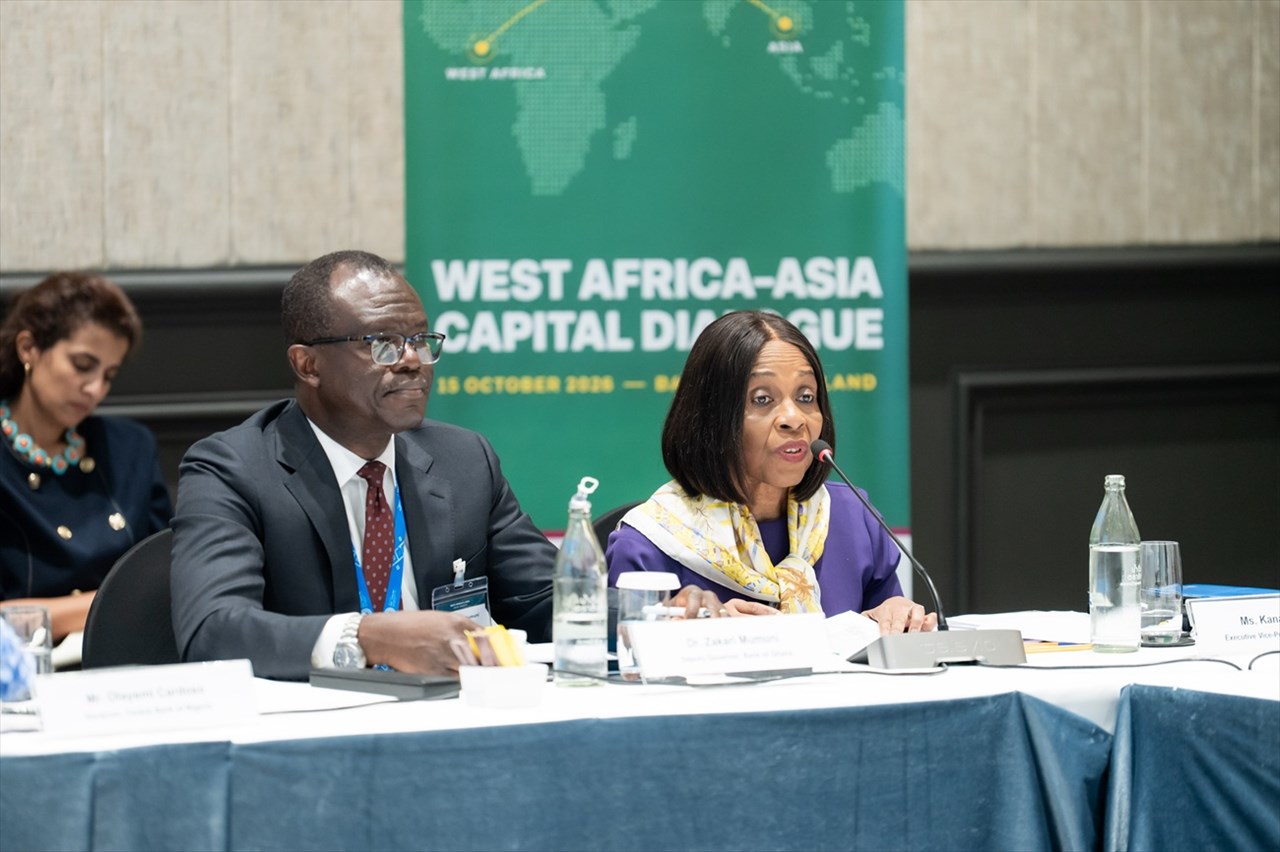
Africa and Asia trade on a large scale, but capital flows are not yet commensurate with their trade volumes. To bridge this gap, financial institutions from both continents initiated discussions on 15 October in Bangkok regarding a financing transaction exceeding one billion dollars, with the ambition of reaching an operational agreement within a period of 3 to 6 months.
Organized by Global Markets and the CEDEAO (BIDC), the West Africa–Asia Capital Dialogue brought together central banks, development finance institutions, insurers, and commercial banks, including ICBC, MUFG, and Nomura. The objective is to connect Asian lenders with African companies and projects capable of mobilizing their financing.
A financing gap of 100 billion dollars. The annual trade finance gap in Africa is estimated to be between 74 and 100 billion dollars, driven notably by foreign exchange constraints, the decline in correspondent banking relationships, high logistics costs, and insufficient risk-sharing mechanisms.
However, there is no shortage of opportunities. The African Continental Free Trade Area (AfCFTA) market represents approximately 1,4 billion people and 3 500 billion dollars in gross domestic product (PIB).
It is still necessary to transform this commercial potential into projects sufficiently structured to convince investors. The experience of Afreximbank highlights this interest.
In 2025, the pan-African bank mobilized more than 800 million dollars in Asian markets through bond issuances in China and Japan. It has also approved more than 2,5 billion dollars for industrial parks and special economic zones.
Six operational parks have attracted more than 5 billion dollars in investments from their tenant companies and generated approximately 32 000 jobs. Risk, the primary obstacle to overcome.
Beyond the availability of capital, the ability to secure transactions remains decisive. Asian banks require reliable information on borrowers, repayment guarantees, and protection mechanisms against political and commercial risks.
The African Trade and Investment Development Insurance (ATIDI) intends to help remove these obstacles through credit insurance and political risk coverage. The BIDC, for its part, relies on its knowledge of West African markets to identify credible borrowers, prepare operations, and facilitate their structuring.
Nigeria is also seeking to strengthen investor confidence. Its central bank governor, Olayemi Cardoso, notably highlighted the unification of the foreign exchange market, the settlement of approximately 7 billion dollars in verified outstanding foreign exchange obligations, and measures aimed at consolidating the banking system.
An agreement still contingent on banking validations. Global Markets is now coordinating exchanges with ICBC, MUFG, Nomura, ATIDI, and African partners to identify borrowers, define needs, and develop a structure that complies with lenders' requirements.
However, the financing of more than one billion dollars remains at the project stage. No agreement has been announced at this stage.
Its realization will depend on due diligence, the commercial agreement of the parties, and the necessary institutional authorizations. The Bangkok discussions aim to establish sustainable financial relations between the two continents.
Improving cross-border payments, notably through better interconnection between African and Asian systems, is among the levers identified to reduce costs and streamline transactions. Published on 22/10/26 11:20.
Dr. Ange Ponou