The figures have the brutality of obvious facts. Within 15 years, 1,2 billion young people will knock on the door of the labor market, which will only accommodate about 400 million of them.
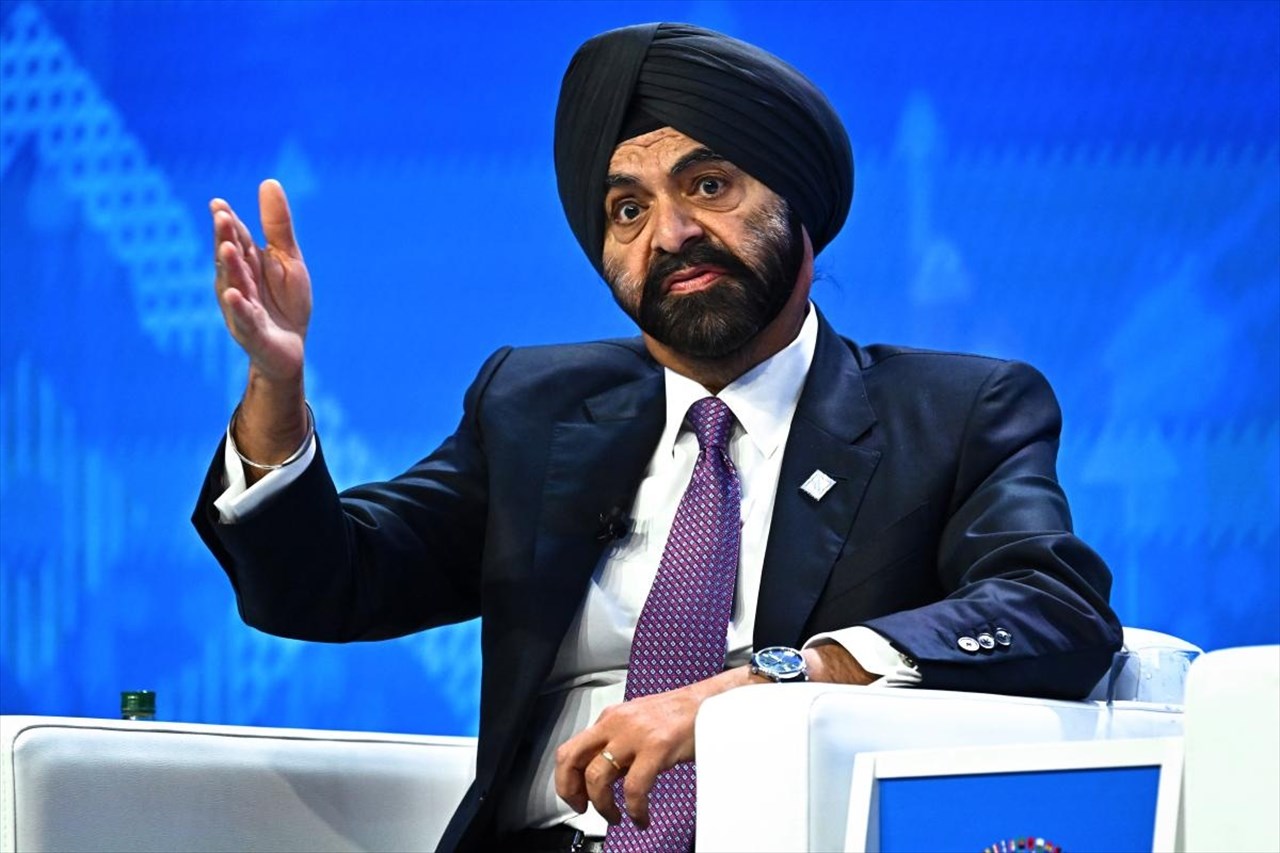
Between these two columns, a chasm of 800 million jobs. This arithmetic vertigo was addressed by Ajay Banga, President of the World Bank Group, during the plenary session of the Annual Meetings on 16 October in Bangkok.
His answer can be summed up in one line: to make one public dollar the spark for several private dollars. A leveraged effect tripled in 4 years.
The demonstration is based on results. During the 2022 fiscal year, the institution mobilized approximately 35 billion dollars in private capital.
It raised 112 billion last year, or 3 times more. Added to its own financing, the total exceeds 230 billion dollars.
The momentum is almost universal: the volume has nearly tripled in lower-middle-income countries, quadrupled in the upper-middle-income bracket, and more than doubled in Africa. Investors from 110 countries have stepped up, led by the United States, the United Kingdom, and India, but also Romania, Chile, Poland, and Brazil.
However, a gray area remains. In low-income countries, where commercial capital is most hesitant, mobilization has stagnated.
Hence the strategy unveiled this week in favor of micro, small, and medium enterprises (MPME), intended to irrigate the most fragile economies where large groups have not yet taken root. A machine restored to working order.
To achieve this, the institution first had to reform itself. The preparation of a project went from 19 to 9 months.
Performance indicators were reduced from 153 to 22, refocused on impact. Results-based financing now covers nearly half of the portfolio, compared to a third previously.
Above all, a balance sheet reorganization increased the lending capacity of the BIRD (the branch that finances middle-income countries) by more than 100 billion dollars over a decade. Cooperation between development banks is intensifying.
The co-financing platform includes about 250 projects, three times as many in 2 years, seeking 138 billion dollars. 3 pillars to create jobs. The employment strategy revolves around 3 levers.
The first concerns infrastructure, both physical and human: electricity, water, transport, but also health and training. They absorbed 40 billion dollars last year, nearly a third of the financing.
The second aims at the predictability of rules, from construction permits to land tenure: 30% of public sector financing supported reforms. The third reduces the risks that hinder investors, through guarantees, equity investments, and local currency loans, which protects lenders against exchange rate fluctuations.
Nearly 55% of the financing and mobilized capital flowed into sectors considered the most job-creating: energy and infrastructure, agribusiness, health, tourism, and value-added industry. Climate co-benefits reach 96 billion dollars, including 48 billion of private origin.
Numerical targets by 2030. Each sector has its own objective.
At the energy level, Mission 300 aims for 300 million Africans to be connected to electricity by 2030. The counter currently shows 59 million, with a clear acceleration: 12 million in 2024, 18 million in 2025, 29 million the year before.
The mix remains deliberately pragmatic (renewables, hydroelectricity, gas, nuclear), with, notably, support for the modernization of nuclear power plants alongside the AIEA, a first in 50 years. Regarding the water sector, one billion people are to benefit from better water security, including 400 million for the Group.
Twenty national pacts are signed, twenty others are in preparation. As for the agricultural sector, out of 300 million smallholders to be transitioned from subsistence to surplus, the Group claims 200 million.
The AgriConnect portfolio already covers 82 million farmers. At the health level, the HealthWorks initiative intends to offer affordable care to 1,5 billion people.
About 600 million have already benefited. Regarding critical minerals, activities will be multiplied by 5 in 5 years, with 20 countries targeted.
Finally, 52 projects were launched last year, compared to 20 3 years ago regarding economic corridors. Artificial intelligence at the scale of poor countries.
The speech rejects giant models, which are too demanding in terms of computing power, energy, and skills for many countries. It prefers 'small IA' with concrete uses: advising a farmer on yields, helping a teacher adapt their lessons, informing a caregiver in their decisions.
The challenge is first to equip c