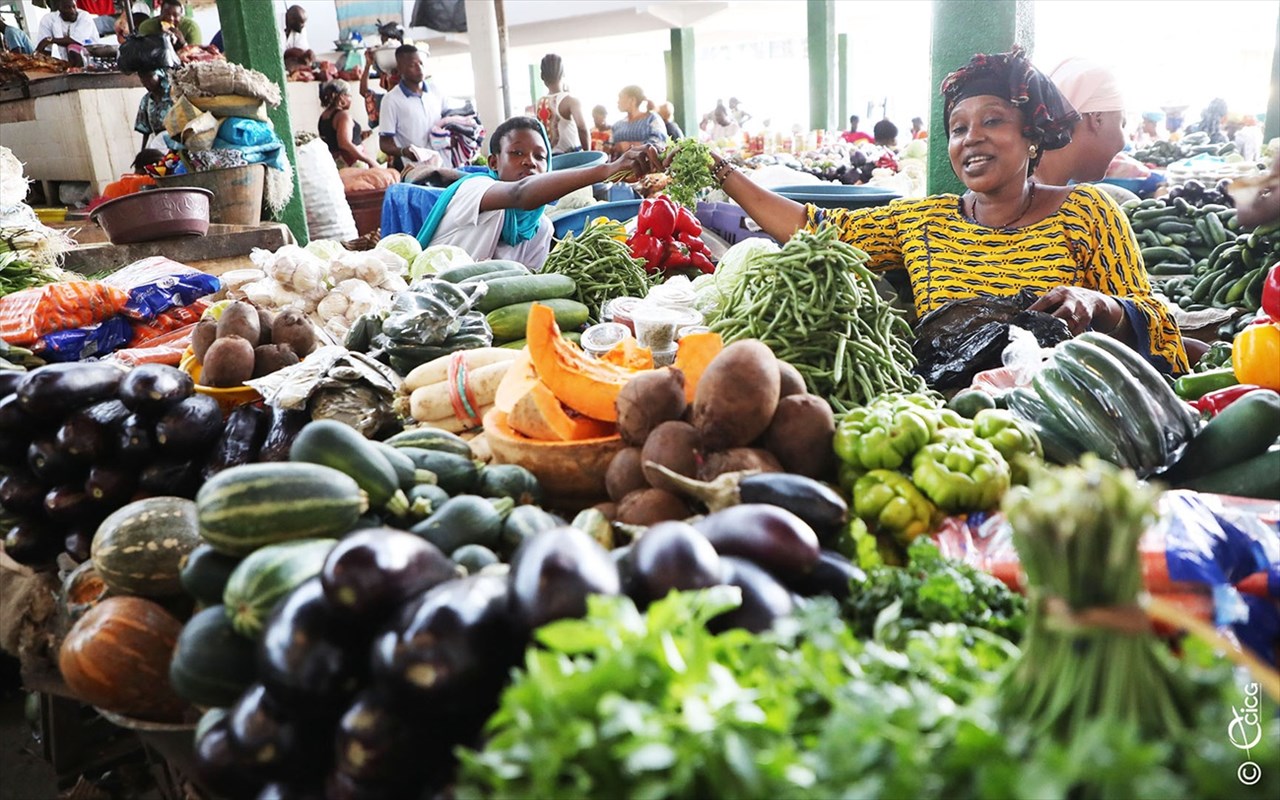
The household consumer basket in Côte d'Ivoire sometimes reacts to a simple barometer: a spike at the pump is enough to move the needle. In September 2026, consumer prices rose by 1,6% year-on-year, compared to 1,2% in August, according to the National Statistical Agency (Anstat), thus recording a gain of 0,4 percentage points.
The increase remains contained, but the trend has undeniably awakened. Fuel, the main driver of the increase.
The Transport category, up by 5,5%, acts as the engine of this acceleration. Gasoline experienced a surge of 9%, compared to 7,4% for diesel.
This surge in prices at the pump then spreads to the entire economy, as the cost of transport increases the cost of goods. Motorcycle prices (-1,2%) and personal equipment parts (-0,9%) barely provide a counterbalance.
The food basket, between marine price surges and cereal lulls. Food and non-alcoholic beverage prices also saw an increase of 1,9%, with strong disparities.
Fresh, refrigerated, or frozen fish rose by 12%; dried, salted, or smoked fish by 14,2%; fresh tropical fruits by 11,2% and fresh meat by 6,9%. Conversely, cereals fell by 3,7%, tubers, plantains, and cooking bananas by 1,8%; and fruit vegetables by 0,5%.
Basic local food products therefore act as shock absorbers. Restaurants and hotels, for their part, show an increase of 1,8%.
Digital, the only declining sector. Prices in the 'Information and communication' category contracted by 2%.
Mobile communication services fell by 3,3%; audiovisual content subscriptions by 4,4% and telephony equipment by 0,5%. Competition between operators and the lower cost of technology directly benefit the consumer.
All segments of inflation are rising: fresh products (+2,7%), energy (+1,6%), and core inflation (+1%). The latter, which removes volatile elements such as perishable goods and energy to reveal the underlying price trend, remains the lowest.
Pressures are therefore real but moderate, both in terms of cyclical (one-off shocks) and structural (long-term dynamics) factors. A widely respected safeguard.
On an annual average, inflation stood at 1,3%, or 0,2 points higher than in August. It remains well below the regional ceiling of 3%, set for the States of the UEMOA.
This comfortable margin leaves Abidjan time to observe, especially since the most sensitive prices, those of energy and fish, depend largely on external factors. It remains to be seen whether the fuel price increase will be durably transmitted to the rest of the economy.
Published on 13/10/26 12:18. Dr.
Ange Ponou