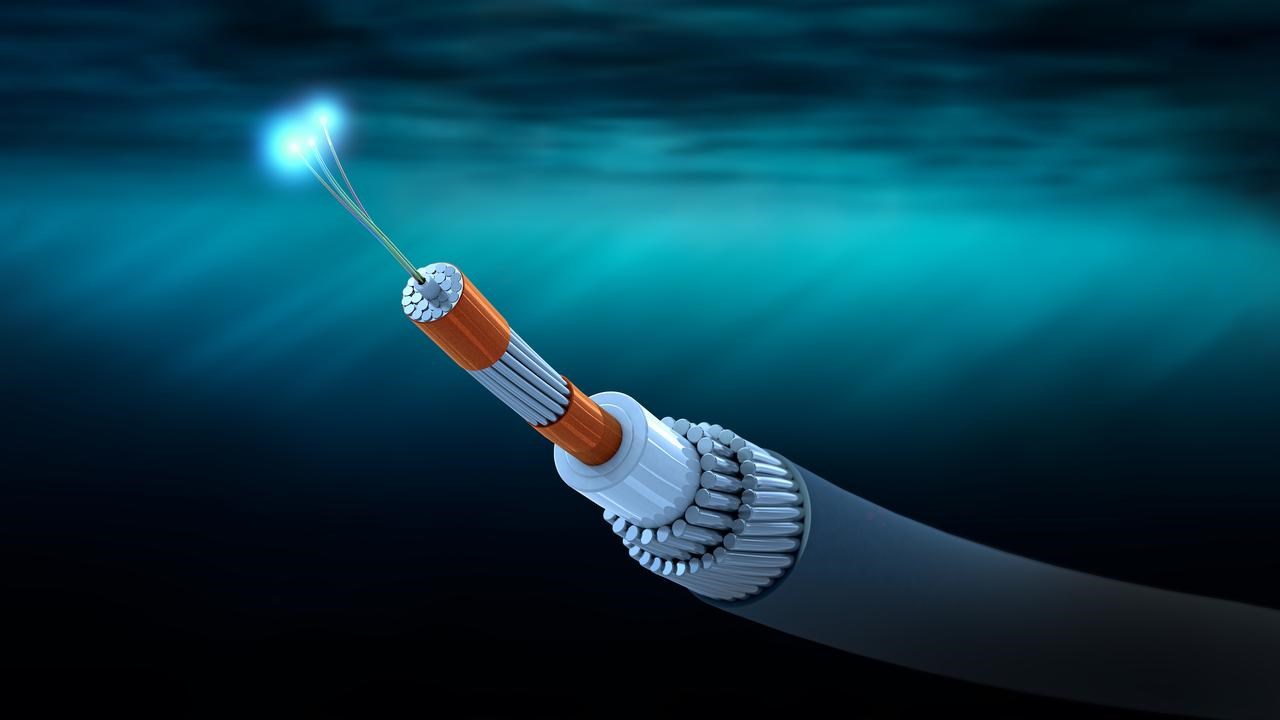
Meta, the American telecommunications giant, is contemplating the deployment of a new transatlantic submarine infrastructure named Petal. According to information revealed by an independent French tech media outlet, this project aims to connect the East Coast of the United States to France over a distance of more than 6 500 kilometers to support the massive growth of its IT services and Artificial Intelligence (IA) technologies.
Indeed, the group led by Mark Zuckerberg, owner of the social networks Facebook, Instagram, and WhatsApp, is facing a continuous explosion in data traffic. The recent arrival of Muse, its autonomous virtual assistant, heralds an intensification of this need for global connectivity.
Furthermore, distributed computing and the synchronization of data centers for model training require constant and voluminous information flows. Consequently, directly controlling its own infrastructure will allow the group to ensure the stability of its platforms while reducing operating costs compared to leasing lines from traditional telecom operators.
Moreover, this initiative would be in line with the strategic investments of the Menlo Park firm. Following the deployment of 2Africa, one of the largest telecommunication systems in the world encircling the African continent, this new route will significantly strengthen the resilience of its global network.
The planned landing in the Marseille region will also allow for the direct supply of the EMEA zone through strategic branching units toward the Middle East and Africa. However, the initiative is still in its preparatory phases.
The presence of the file in regulatory documents confirms that steps are underway, but several uncertainties remain. At this stage, the precise submarine route, the exact location of the landing station on the American coast, and the official project schedule remain to be clarified.
The initial maximum capacity of the cable has not been officially disclosed either. It should be recalled that almost all global information flows rely on such IT installations.
Indeed, 99% of intercontinental traffic is carried by submarine cables. According to the organization Fratel (Francophone network of telecommunications regulation), international capacity will continue to experience exponential growth in the coming years.
Over the past decade, annual growth has averaged nearly 40%, and projections anticipate an increase of approximately 25% per year over the next 10 years. Today, more than 1 300 000 km of cables are already in service across the globe to ensure these vital flows.
In this context and taking these forecasts into account, mastering submarine digital highways represents a crucial economic and technological challenge for web giants. Positioning itself as its own physical infrastructure operator will allow Meta to guarantee the sovereignty and fluidity of its services to support future developments in artificial intelligence.
Anselme Akéko Published on 01/10/26 17:35 The Editorial Staff