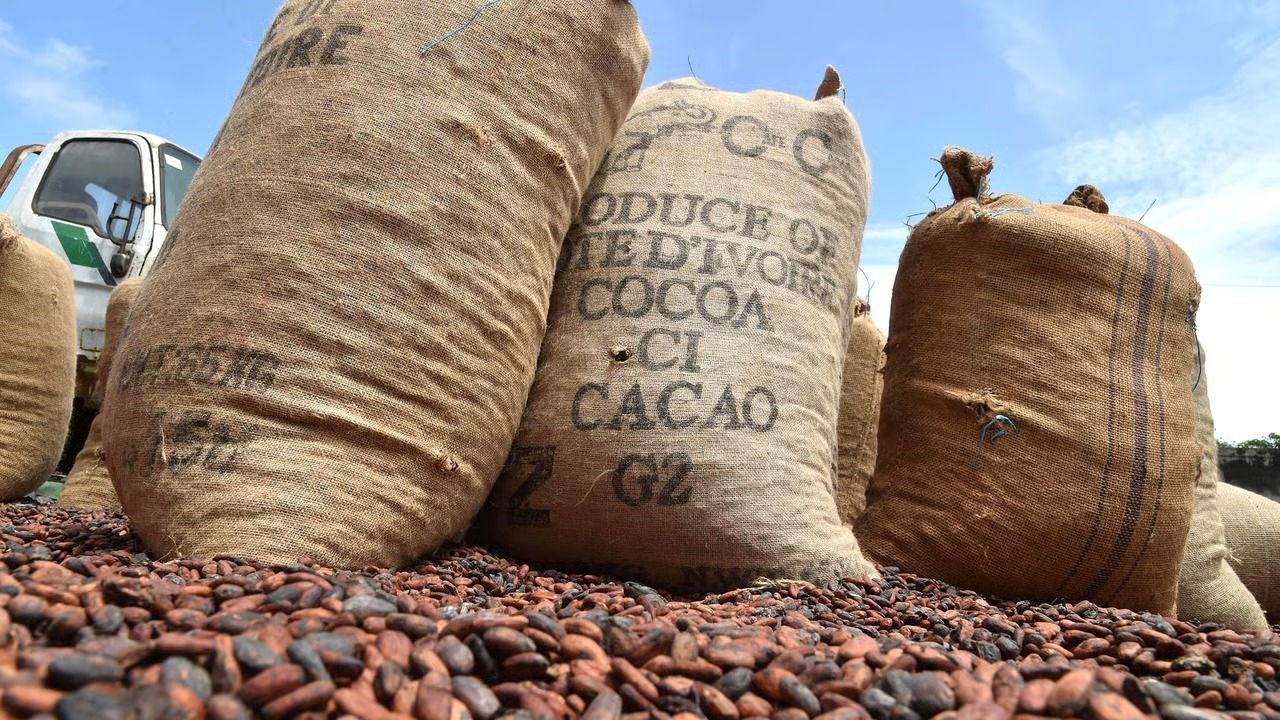
The main cocoa harvest in Côte d'Ivoire, the world's leading producer, is expected to reach approximately 1,25 million metric tons for the 2026/27 crop year, compared to 1,5 million metric tons in the previous one, representing a decline of nearly 17 %. This estimate is based on a survey conducted by Reuters among producers, exporters, cooperatives, and buyers, as weather conditions and rising input costs weigh on production outlooks.
The main crop season, which runs from September to February 2027, has faced a rainfall deficit since July. While the country is typically in the middle of the rainy season during this period, several producers interviewed report persistently dry conditions in key production zones.
This lack of moisture is notably disrupting the development of flowers and young pods. In addition to this climatic constraint, there is a decline in the use of fertilizers and pesticides.
The rise in the prices of these inputs has reportedly led several producers to reduce their purchases, thereby limiting treatments and plantation maintenance. Last April, a survey cited by Reuters already indicated that 73 % of producers surveyed in three major cocoa regions had not purchased any fertilizer for the next two production cycles.
Significantly lower arrivals. The first volumes of the season also confirm the expected slowdown.
An executive at an Abidjan-based export company estimates weekly cocoa arrivals at Ivorian ports at only 20 000 to 25 000 metric tons in October, compared to an average of approximately 71 300 metric tons per week during the same month last year. The situation was already concerning in September.
Producers had reported a lack of rain in several cocoa-growing regions, including pods falling prematurely from trees. They estimated that continued drought through mid-October could shorten the main harvest.
Furthermore, the schedule for the campaign was brought forward by one month compared to the previous season. The 2025/26 main harvest began in October and continued through March, whereas the 2026/27 campaign officially began in September.
The expected decline in the Ivorian harvest occurs in a context of broader risks to West African cocoa supply. In Ghana, the second-largest global producer, the regulator COCOBOD anticipated at the end of July a decline of at least 16 % in production for the 2026/27 crop year, primarily due to weather conditions, diseases, and aging plantations.
Fanuelle YAO Published on 02/10/26 17:09 The Editorial Staff