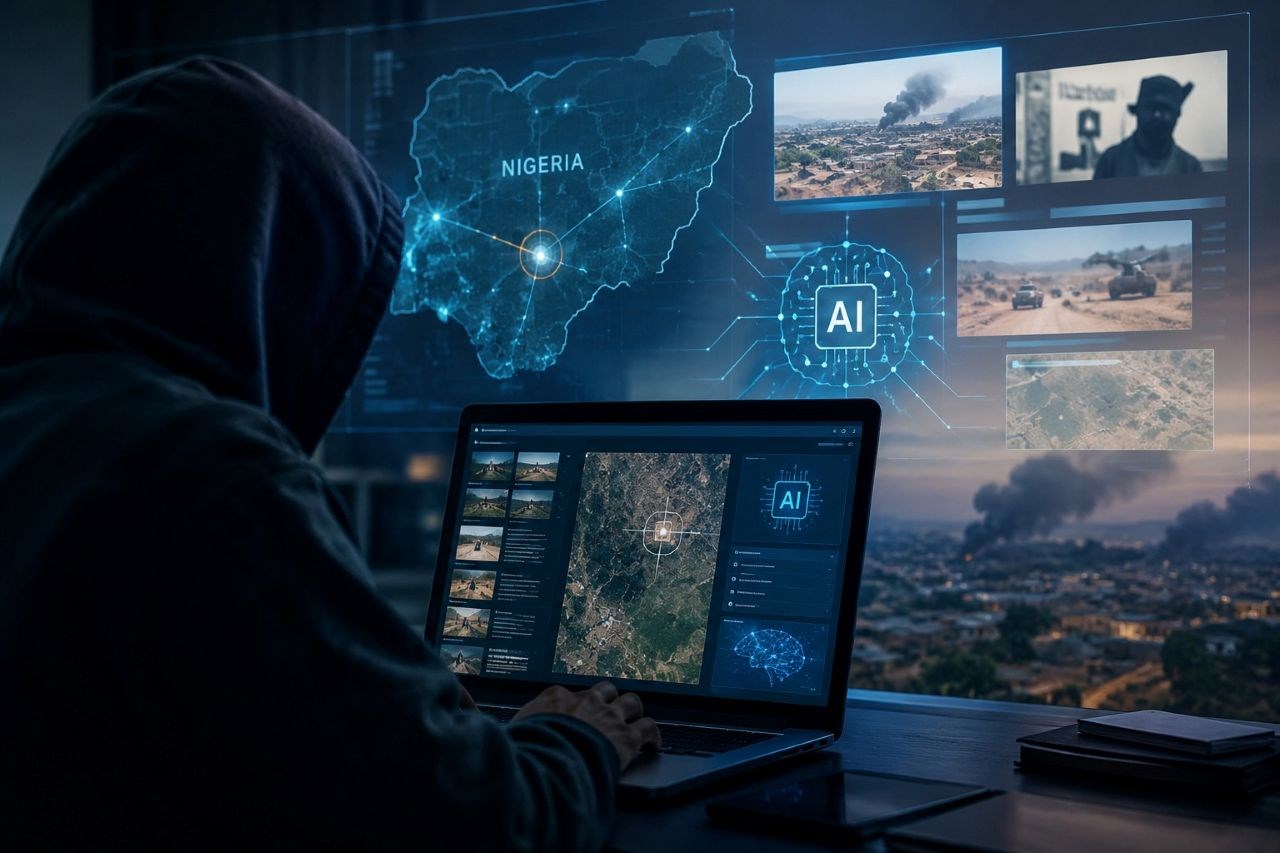
In Nigeria, in the northeastern region, Boko Haram factions and the Islamic State's West Africa Province (PAOEI) are integrating generative artificial intelligence directly into the heart of their strategic and tactical operations. Field research reveals that these combatants have been using tools such as ChatGPT, Claude, DeepSeek, Gemini, or Grok since 2023 to plan attacks, design or improve explosive devices, optimize tactical logistics, and troubleshoot weaponry, at times bypassing the safety barriers of these systems.
Entitled "God helped us, and IA did too: how the terrorist group Boko Haram uses cutting-edge IA", this investigation is led by Antonia Juelich, researcher and head of international security at the Cambridge Programme on AI Science & Policy and associate at the Leverhulme Centre for the Future of Intelligence. Her work highlights a major technological shift in asymmetric warfare.
See also- Can Africa unlock 1 000 billion USD thanks to IA? "Yes, but...", responds the World Bank.
It is based on a series of 27 semi-structured interviews conducted in person with former members and repentant commanders of these insurgent organizations. According to data collected by Antonia Juelich, the adoption of these technologies is not due to isolated initiatives but rather a genuine institutionalization process.
The central leadership of the Islamic State has indeed dispatched specialized instructors from Iraq, Afghanistan, and North Africa to conduct practical training sessions. These emissaries provided laptops equipped with encryption software, configured paid subscriptions, and taught advanced jailbreaking techniques to bypass the ethical guardrails of IA models.
See also- The African financial industry at a crossroads: Between digitalization, inclusion, and regulation. Thanks to these social engineering methods, trained young recruits managed to obtain detailed instructions for manufacturing improvised explosive devices, repairing complex weapons, and refining raid logistics.
The study indicates that this adoption accelerated just months after the public launch of ChatGPT in November 2022. Experts describe this transformation as a force multiplier, a dynamic that significantly increases the operational efficiency of groups already well-versed in guerrilla techniques.
By leveraging interconnected transnational jihadist networks, the spread of these technological practices now extends beyond Nigeria to other regional affiliates in Africa and beyond. An equation with multiple unknowns for intelligence services and security authorities.
For the latter, this systematic appropriation of artificial intelligence is altering the contours of the terrorist threat, compelling policymakers and technology developers to urgently re-evaluate the security protocols of their models. Anselme Akéko.
Published on 15/10/26 09:13. The Editorial Staff