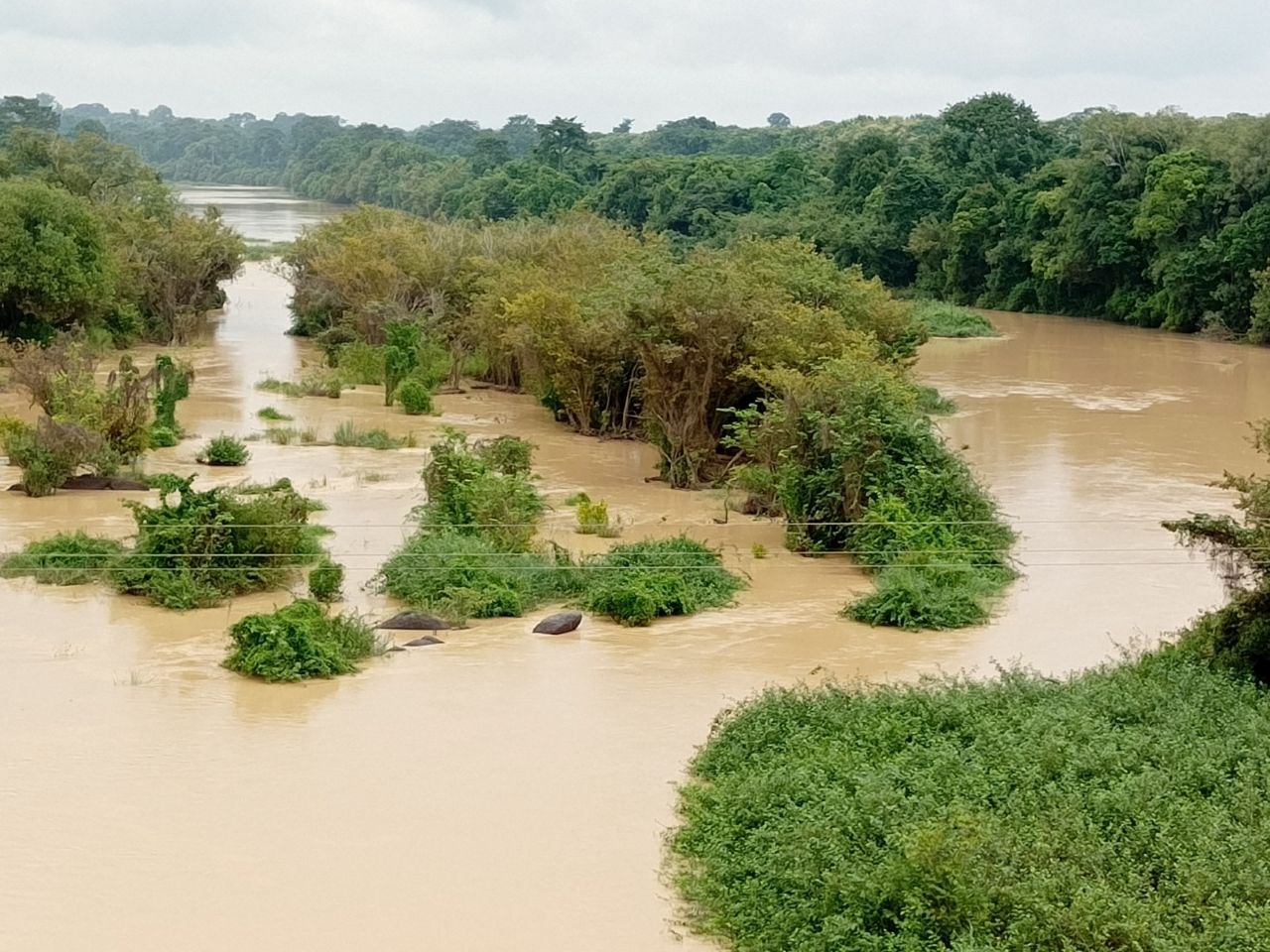
Ivorian teacher-researchers presented technological solutions to combat water pollution caused by illegal gold mining during a meeting organized by the Fund for Science, Technology and Innovation (FONSTI) on Thursday, October 8, 2026, in Abidjan. Confronted with chemical contamination of rivers, Dr.
Seiny Roger N'Dri of the École normale supérieure (ENS) in Abidjan has developed an environmental monitoring device. His innovation relies on a sensor dedicated to mercury detection and an electrochemical sensor designed to identify cyanide.
These instruments are accompanied by ecological records intended to map affected areas. Other academics proposed complementary approaches.
Dr. Kouassi Bruno Kpangui from the Université Jean-Lorougnon Guédé in Daloa is working on soil rehabilitation through backfilling pits and fertilization to revive the cultivation of peppers, cassava, or tomatoes without the transfer of pollutants.
See also- Côte d'Ivoire: Small-scale legal mining, the alternative response to illegal gold mining. For his part, Dr.
Sandotin Lassina Coulibaly of the Université de Man advocates for depollution through plants (phytoremediation) and the transformation of mining residues into construction materials such as bricks or tiles. According to Professor Bernard Ossey Yapo, Director General of the Ivorian Anti-Pollution Center (CIAPOL), environmental degradation is accompanied by major economic and territorial impacts.
For the State, annual fiscal losses are estimated at 744 billion FCFA, while 4 600 billion FCFA in gold is sold outside official channels. Geographically, 20 out of 31 regions are affected, with 545 sites still active across 55 departments, notably in Tabou, Séguéla, Zouan-Hounien, Dabakala, and Daoukro.
See also- Côte d'Ivoire/ Illegal gold mining: Satellite monitoring as a technological solution. In the field, 8 524 eviction operations have already been carried out by the authorities.
These actions are part of a 36-month emergency program with a budget of 45 billion FCFA. This plan provides for the restoration of degraded areas, the securing of 4 100 cyanidation and mercurization basins, the restoration of 1 355 hectares of agricultural land, the rehabilitation of 60 km of waterways, as well as the socio-professional reintegration of 5 000 former gold miners.
As a reminder, beyond the work of the FONSTI, illegal gold extraction constitutes a major scourge for West Africa, directly threatening ecosystems and biodiversity. Faced with this phenomenon that thrives in isolated areas away from oversight, satellite imagery also offers an effective means of surveillance.
Useful for judicial investigations and awareness-raising alike, these satellite data reveal the extent of the social, health, and agricultural damage, by highlighting its most critical consequence: water pollution. Anselme Akéko.
Published on 09/10/26 13:00. The Editorial Staff.