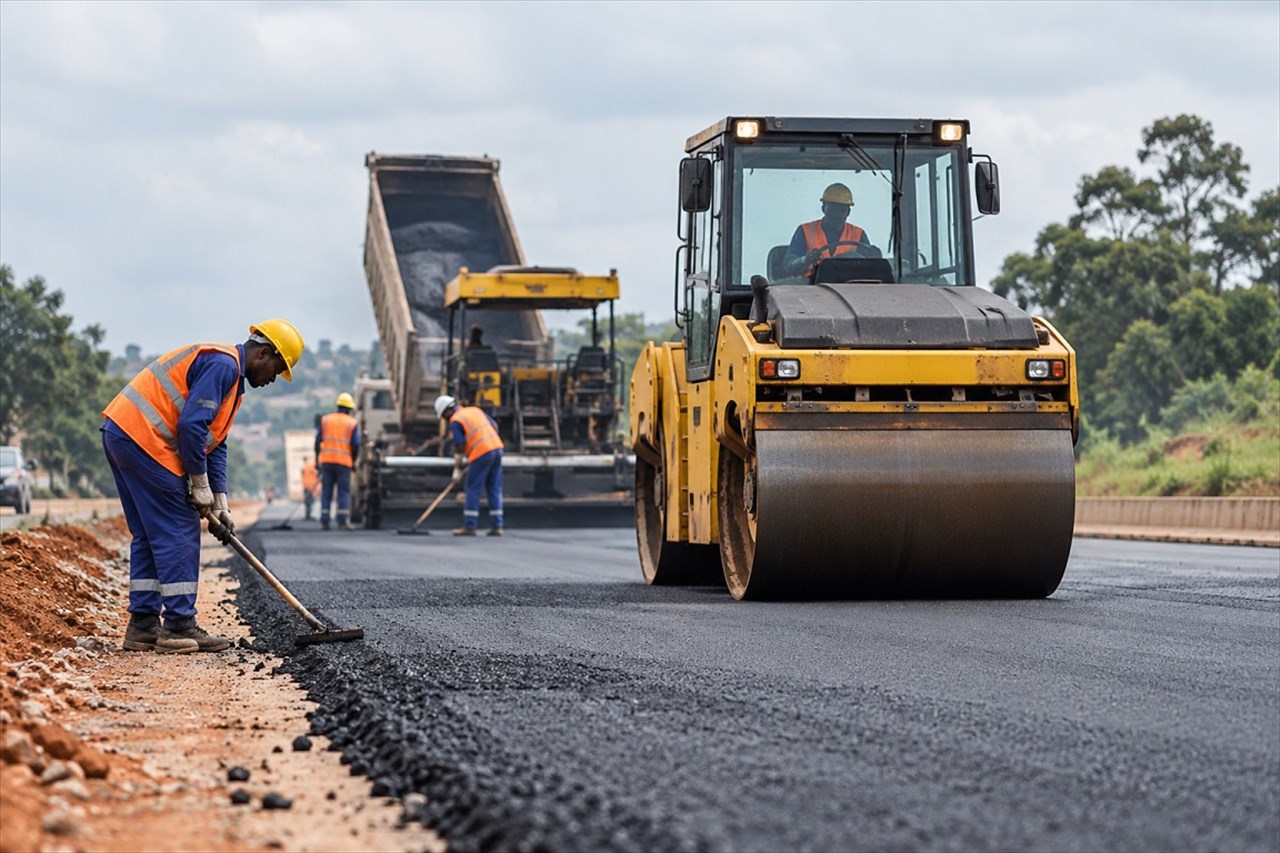
The Republic of the Congo plans to increase its capital expenditure to 680 billion FCFA in 2027, compared to 279,3 billion FCFA executed in 2025. Presented during the Council of Ministers on October 7, 2026, as part of the draft finance bill for 2027, this allocation represents an increase of 143,5% over two years.
Of this amount, the government intends to dedicate 327,7 billion FCFA of internal resources to structural investments. This ambition marks a significant acceleration compared to the recent trajectory of public capital expenditure.
According to available budget execution data, these amounted to 264,4 billion FCFA in 2024, before increasing by 5,6% to reach 279,3 billion FCFA in 2025. The shift to 680 billion FCFA in 2027 would imply an increase of 143,5% compared to the 2025 level, more than double the expenditure executed that year.
The envisaged budgetary effort comes in a context marked by significant needs for basic infrastructure. Roads, electricity, access to drinking water, and sanitation are among the sectors whose development is essential to improve living conditions for the population, facilitate trade, and support corporate activity.
In its February 2023 report on the poverty reduction and growth strategy of the Republic of the Congo, the International Monetary Fund (FMI) highlights the persistence of these infrastructure deficits, despite investments committed by the authorities. These shortcomings act as a drag on the diversification of the economy and the development of productive activities outside traditional sectors, particularly hydrocarbons.
The scale of the needs also appears in the World Bank's Country Climate and Development Report, published in 2023. The institution estimates that 9,2 billion dollars in investment is required to modernize the country's urban infrastructure, strengthen its resilience to the effects of climate change, and improve living conditions in cities.
Relative to this order of magnitude, the 680 billion FCFA allocation planned for 2027 remains limited in light of the identified urban needs. While it constitutes a notable budgetary effort compared to expenditures executed in recent years, it cannot, on its own, close the accumulated deficits.
The scope of this increase will depend, in particular, on the government's ability to mobilize complementary funding and direct resources toward the highest-priority projects. Beyond the volume of announced credits, their effective execution represents a major issue.
In its post-financing assessment published in April 2026, the FMI notes that weak public investment and energy supply disruptions weighed on the Congo's economic growth in 2025. The institution also highlights cash flow tensions and the accumulation of payment arrears, constraints capable of compromising the completion of projects included in the budget.
For Congo, the challenge therefore consists as much in increasing investment credits as in guaranteeing their transformation into operational infrastructure. This presupposes securing funding, honoring payment commitments to companies tasked with the work, and improving the execution capacities of public projects.
Claude Paul Tjeg. Published on 09/10/26 13:50.
The Editorial Staff