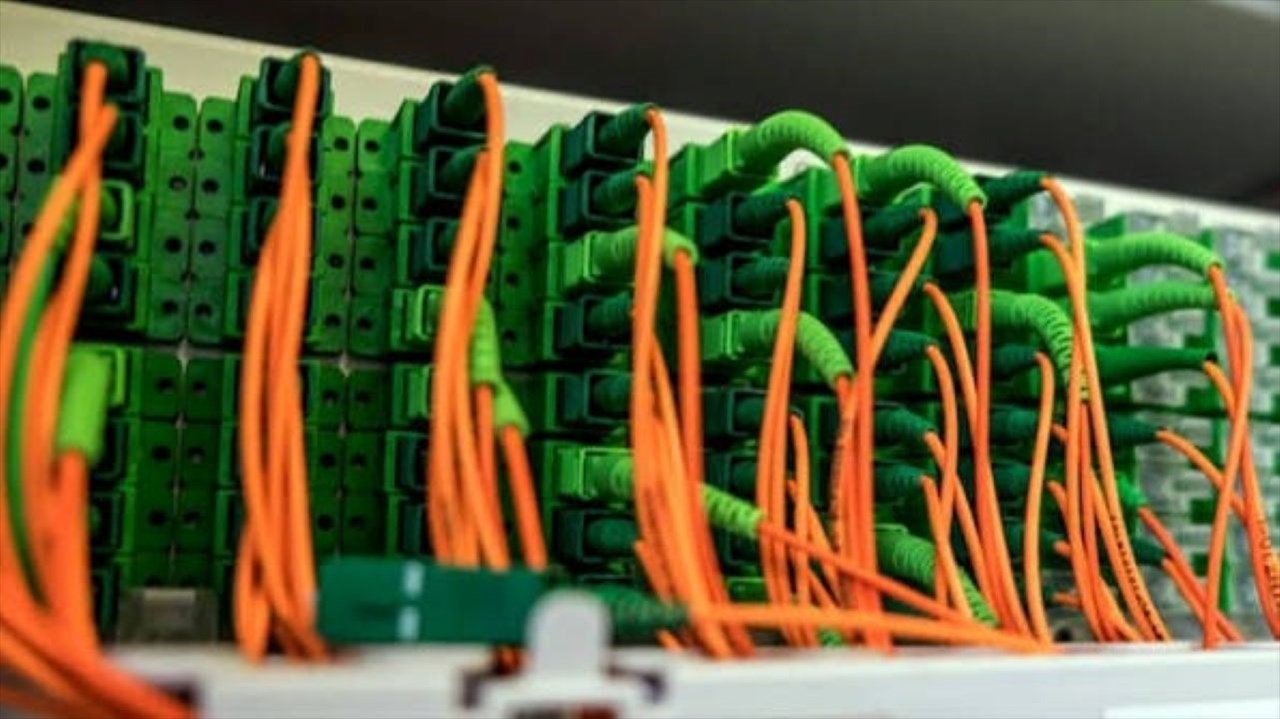
Nigeria intends to expand its digital coverage nationwide with the support of the European Union (UE), which is granting a subsidy of 14 million euros, or approximately 9,2 billion FCFA, to prepare for the deployment of a 90 000 km fiber optic network. The agreement, signed on 14 October in Abuja, is part of the BRIDGE project, an initiative of the Nigerian government intended to strengthen telecommunications infrastructure and expand access to high-speed Internet.
This envelope is primarily intended to finance technical studies, network design, and the preparatory work necessary for its completion. It also includes support for strengthening the skills of the public institutions involved in the project.
The funding is administered by the European Bank for Reconstruction and Development (BERD), while the Nigerian ministries in charge of Budget and Communications are involved in the coordination and technical implementation of the program, respectively. See also- The UE mobilizes 618 million euros to accelerate the energy transition in Africa.
Beyond the construction of infrastructure, the project aims to improve access to digital services in a country where connectivity needs remain significant, particularly in underserved areas. The expansion of fiber optics should make it possible to transmit more data at high speed and support the development of digital banking services, e-commerce, and economic activities dependent on a reliable connection.
For businesses, better coverage could also facilitate market access and reduce certain constraints related to communication and data exchange. See also- The UE grants a donation of 15 million euros to Niger.
This European contribution is in addition to the efforts undertaken by Abuja to mobilize external financing for its digital infrastructure. In February 2026, the authorities notably reported financing of 500 million dollars from the World Bank, as well as an investment of 100 million dollars from the BERD and a European subsidy of 22 million euros for the BRIDGE project.
The 14 million euros announced in October are, however, intended for the preparation of the network and should not be confused with the total cost of its deployment. The information available does not yet allow for a precise determination of how they relate to the previously announced financing, nor the overall budget required for the construction of the 90 000 km of fiber optics.
Fanuelle YAO. Published on 16/10/26 13:25.
The Editorial Staff