Mali could benefit from 800 million dollars, or approximately 480 billion FCFA, in financing from the African Development Bank (BAD) and its partners by 2031. This envelope, included in the institution's 2026-2031 country strategy, is intended to contribute to the financing of infrastructure and support the transformation of the Malian economy, particularly in agriculture, transport, and energy.
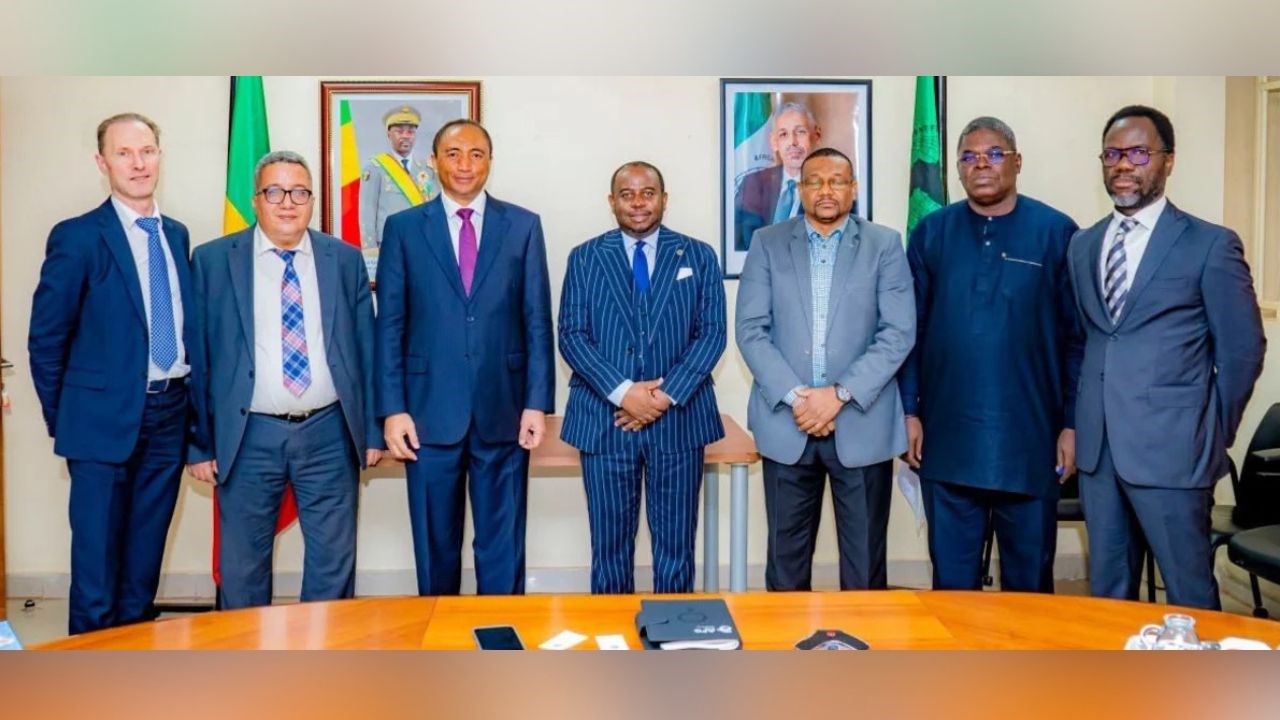
The implementation of this strategy was at the heart of the exchanges between the BAD and the International Monetary Fund (FMI), during a meeting held on Tuesday, 6 October, at the Bank's offices in Bamako. The discussions focused in particular on the country's macroeconomic outlook, investment needs, and reforms that could support more sustainable growth.
Approved in April 2026, the Country Strategy Paper (DSP) 2026-2031 is intended to support the National Strategy for Emergence and Sustainable Development (SNEDD) 2024-2033. The BAD intends to finance infrastructure capable of better resisting shocks, while strengthening private sector investment opportunities.
Its country director, Cédric Achille Mbeng Mezui, believes that this framework should make it possible to increase the available financing and consolidate the institution's commitment to businesses. See also- Africa: The BAD will activate new levers to better prepare states for sovereign ratings.
The Bank already has a significant presence in the country. Since the beginning of its operations in Mali in 1974, it has approved approximately 117 projects representing nearly 4,3 billion dollars.
Its current portfolio includes 15 projects, including 14 in the public sector, for a total commitment of approximately 478 million dollars, or nearly 287 billion FCFA. Beyond infrastructure, the planned interventions also focus on skills development and job creation, particularly for young people.
The Bank's indicative operational program for the 2026-2028 period provides for five sovereign operations, that is to say, financing granted to the State or benefiting from its guarantee, for a cumulative amount of 419,37 million dollars. This program could also open up prospects for new operations in favor of the private sector.
The BAD is also seeking to identify promising projects in the financial sector and has established a consultation framework with the National Council of Employers of Mali (CNPM) to strengthen its exchanges with companies. The institution also wishes to mobilize the Malian diaspora more effectively by identifying investment opportunities and value chains capable of contributing to the development of the productive sector.
See also- BAD: Nearly 11 billion USD committed in 2025 despite global economic fractures. For the FMI, this coordination should make it possible to better articulate the interventions of financial partners around the country's needs.
The Fund's mission chief for Mali, Ivohasina Fizara Razafimahefa, stressed the importance of regular dialogue between institutions in order to maintain a common reading of economic difficulties and to support the priorities defined by the Malian authorities. The two institutions thus intend to continue their exchanges on the reforms and investments necessary for the structural transformation of Mali, in accordance with the Mali Kura 2063 Vision and the SNEDD.
The challenge will be to translate the announced financing into concrete projects, capable of strengthening the country's productive capacities and supporting its long-term development. Fanuelle YAO Published on 12/10/26 12:24 The Editorial Staff