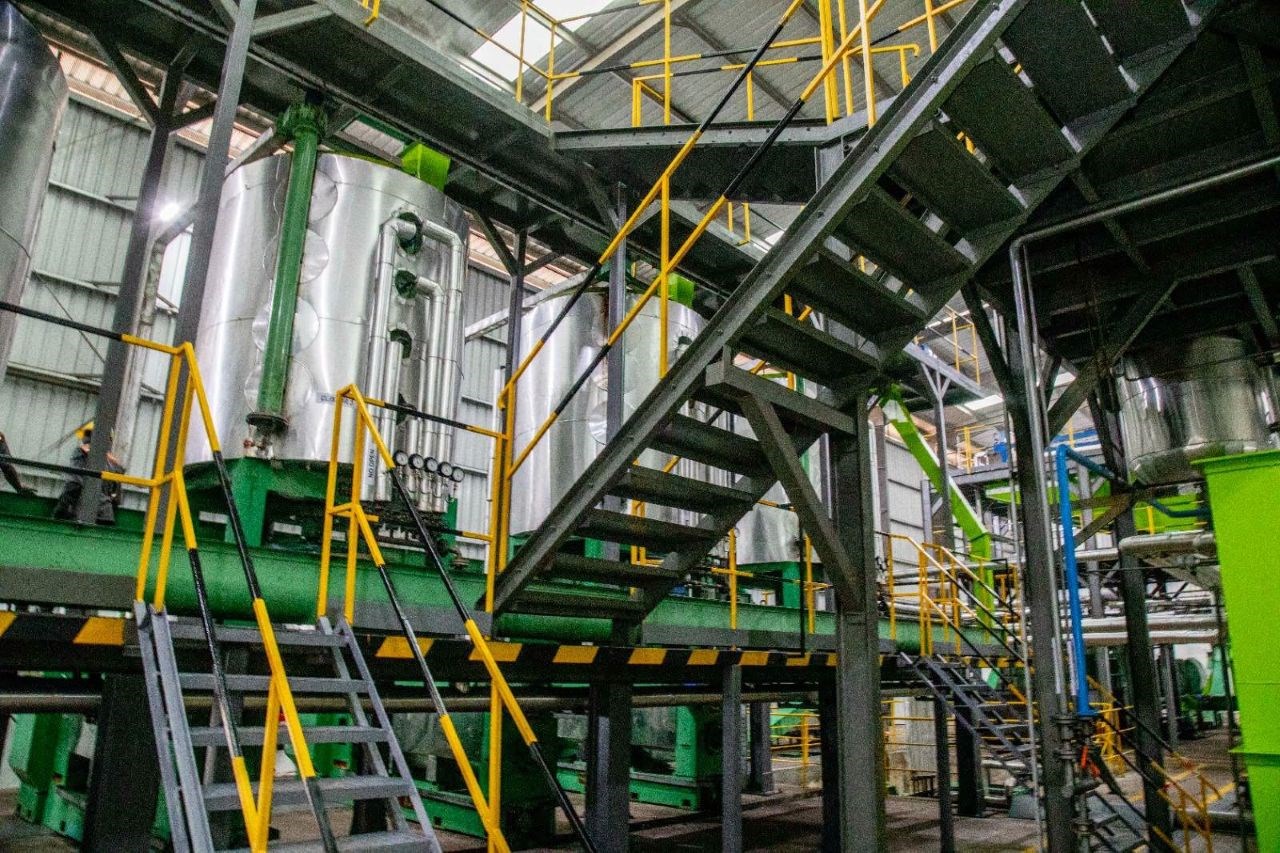
The local processing of agricultural products has reached a new milestone in Côte d'Ivoire. Beta Veg Oil has officially inaugurated, on this 12 of October, an industrial unit for shea and soy processing in Kongodékro, in the commune of Bouaké, located in the center of the country.
The project represents an investment of 10 billion FCFA, or approximately 17 million dollars, and is part of the national strategy for industrial development and the valorization of agricultural resources. The infrastructure has an annual processing capacity of 70 000 tons of raw materials.
It is already producing shea butter and also plans to manufacture refined soybean oil and meal for animal feed. According to information provided during the inauguration, construction work on this industrial unit began in January 2025.
Its commissioning reinforces national oilseed processing capabilities, with the ambition of capturing more value-added within the Ivorian territory rather than marketing raw materials without processing. Presented by its promoters as the largest Ivorian solvent extraction facility dedicated to shea and soy, the Beta Veg Oil plant aims to help further structure the value chains of these two agricultural products.
Beyond the facility itself, the challenge is to develop industrial activity capable of supporting the demand for raw materials, creating commercial opportunities, and fostering the emergence of an economic base surrounding agricultural processing. A processing potential still under-exploited in the shea sector The arrival of Beta Veg Oil comes in a sector where installed industrial capacities remain higher than the volumes of shea nuts marketed through formal channels.
According to the Cotton, Cashew and Shea Council (CCAK), the regulator for these sectors, Côte d'Ivoire already has around twenty processing units, with an estimated installed industrial capacity of approximately 130 000 tons of kernels per year. For the 2025-2026 campaign, the volume of shea nuts recorded in the formal marketing circuit was 51 697 tons.
According to the report provided by the regulator, these volumes were directed to local processing units. They represent approximately 40% of the industrial capacity estimated by the CCAK.
For the 2026-2027 campaign, launched last August, the Ivorian authorities are targeting 60 000 tons of marketed nuts, an increase of approximately 16% compared to the previous campaign. The gap between available capacities and the volumes actually marketed thus highlights a major challenge for the sector: ensuring a regular supply to industrial units to promote their effective utilization and profitability.
In this perspective, measures aimed at better regulating the marketing of shea nuts and orienting supply toward local processors hold an important place in the national production valorization policy. More than 400 000 women affected by industrial opportunities The shea sector engages more than 400 000 women in Côte d'Ivoire, particularly in collection and artisanal processing activities, according to figures provided by authorities during the inauguration ceremony.
For these stakeholders, the development of additional industrial capacity can represent an opportunity to expand market outlets, provided that supply mechanisms ensure sustainable commercial relations and satisfactory remuneration. In this context, Beta Veg Oil plans to deploy the 'Beta Nafa' program, which is expected to enable direct purchases from collectors, support for cooperatives, and pre-financing of collection campaigns.
The initiative aims to bring collectors closer to the industrial operator and facilitate the mobilization of raw materials necessary for the plant's operation. Its effectiveness will depend in particular on the volumes purchased, payment terms, and the income effectively generated for the women involved.
The project involves the creation of 450 direct jobs and more than 400 000 indirect jobs potentially affected by the sector's activities, particularly for the benefit of female collectors. These figures are based on the projections announced regarding the project and do not necessarily correspond to jobs already created.
Transforming more to increase sector revenues. The commercial prospects for processed shea constitute another argument in favor of developing industrial capacities.
At the co