Ivorian coffee no longer holds the weight it once did in the country's agricultural economy, but it remains a sector that is far from marginal. Approximately 408 000 smallholder farmers participate in coffee production, according to data from the Ivorian Ministry of Finance.
Agriculture, which employs approximately 66% of the active population and accounts for around 18% of the PIB, also remains a pillar of the national economy. Coffee is thus part of an agricultural fabric whose effects extend far beyond the mere production of beans.
This economic importance, however, faces a less favorable reality: Ivorian coffee production remains highly volatile. After reaching 95 520 tonnes in 2022, it fell to 46 932 tonnes in 2023, according to data from the Coffee and Cocoa Council.
A sector seeking to regain productivity. It is precisely in this area that Nestlé intends to focus its actions.
Present in Côte d'Ivoire for more than 65 years, Nescafé has been deploying the 2012 Nescafé Plan since NESCAF, a sustainability program designed to support producers and improve agricultural practices. In other words, through Nescafé, Nestlé intends to contribute to the development of the coffee sector by adding value to locally produced coffee, strengthening its local processing, and focusing on the skills and dynamism of Ivorian entrepreneurs.
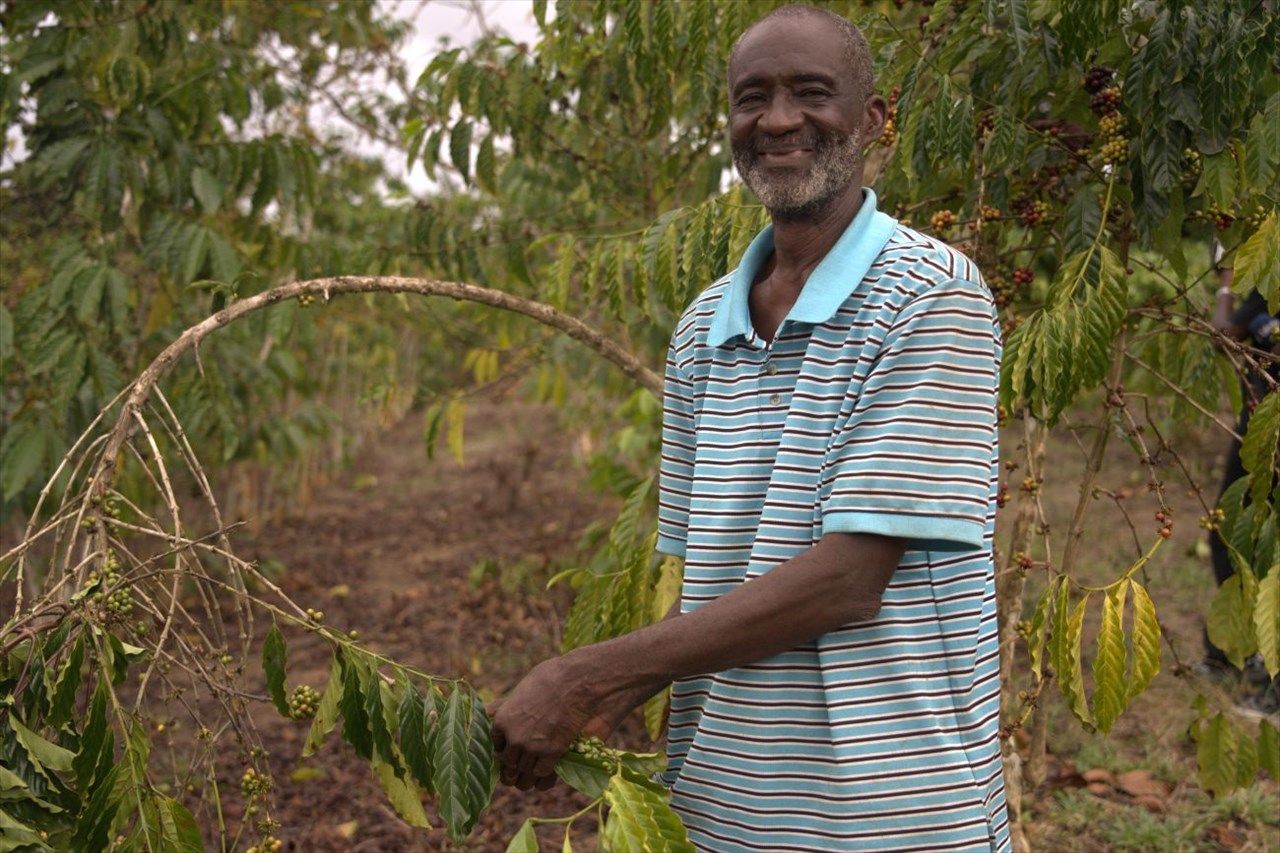
The program currently involves more than 21 000 producers organized into 45 cooperatives, particularly in the East, West, Center-West, and South-West of the country. The support focuses in particular on training in agricultural practices, plantation maintenance, soil fertility preservation, and the adoption of more environmentally friendly techniques.
This intervention is of particular importance in a sector faced with the need to renew its productive potential. Composting from coffee husks and plant residues, agroforestry, and the improvement of cultivation practices are among the levers mobilized.
The partnership renewed in 2026 between Nestlé Côte d'Ivoire and the National Center for Agronomic Research (CNRA) constitutes another component of this strategy. Six improved Robusta varieties have been approved and 1,8 million improved cuttings are to be made available over 3 years to contribute to the renewal of plantations.
For these varieties, Nestlé cites a superior yield potential that can reach 86%. From bean to local value added.
The challenge for Côte d'Ivoire lies not only in the quantity of coffee produced. It also concerns the country's ability to retain more value within its territory.
Between 2022 and 2023, while coffee production was falling sharply, the local processing rate increased from 20% to 34%. This change in processing is a strategic issue for an economy seeking to reduce its dependence on the export of raw materials.
The government's assessment shows that export revenues for green coffee fell from 51,74 billion FCFA in 2020 to 85,53 billion FCFA in 2024, while those from processed coffee rose from 38,68 billion in 2020 to 48,83 billion FCFA in 2024. In this context, the existence of a Nescafé factory in Abidjan gives an industrial dimension to Nestlé's commitment.
The group indicates that it mobilizes hundreds of skills there focused on processing and the quality of the finished product. The factory has also integrated measures regarding resource management, including the installation of solar panels and waste recycling.
Nestlé Côte d'Ivoire also indicates that it received the Excellence Award for the best eco-citizen company in 2022, a distinction it had already obtained in 2019. Cooperatives as a vector for rural development.
The NESCAF Nescafé Plan is not limited to agricultural plots. According to Nestlé, some supported cooperatives have also financed infrastructure and community initiatives through premiums linked to coffee quality and good agricultural practices.
The projects mentioned include the restoration of schools, the construction of classrooms, the installation of solar-powered water wells, and support for the Associations for the Promotion of Community Mutual Aid (AVEC). Furthermore, via AVEC, more than 1 000 women in coffee-growing communities are trained in entrepreneurship to create or expand Income-Generating Activities.
This dimension highlights the role that producer organizations can play in the local redistribution of value created by the sector. Employment and skills, another link in the chain.
Nescafé's action also extends beyond the agricultural sector. In Côte d'Ivoire, the My Own Business initiative claims to have created more than 500 jobs, while