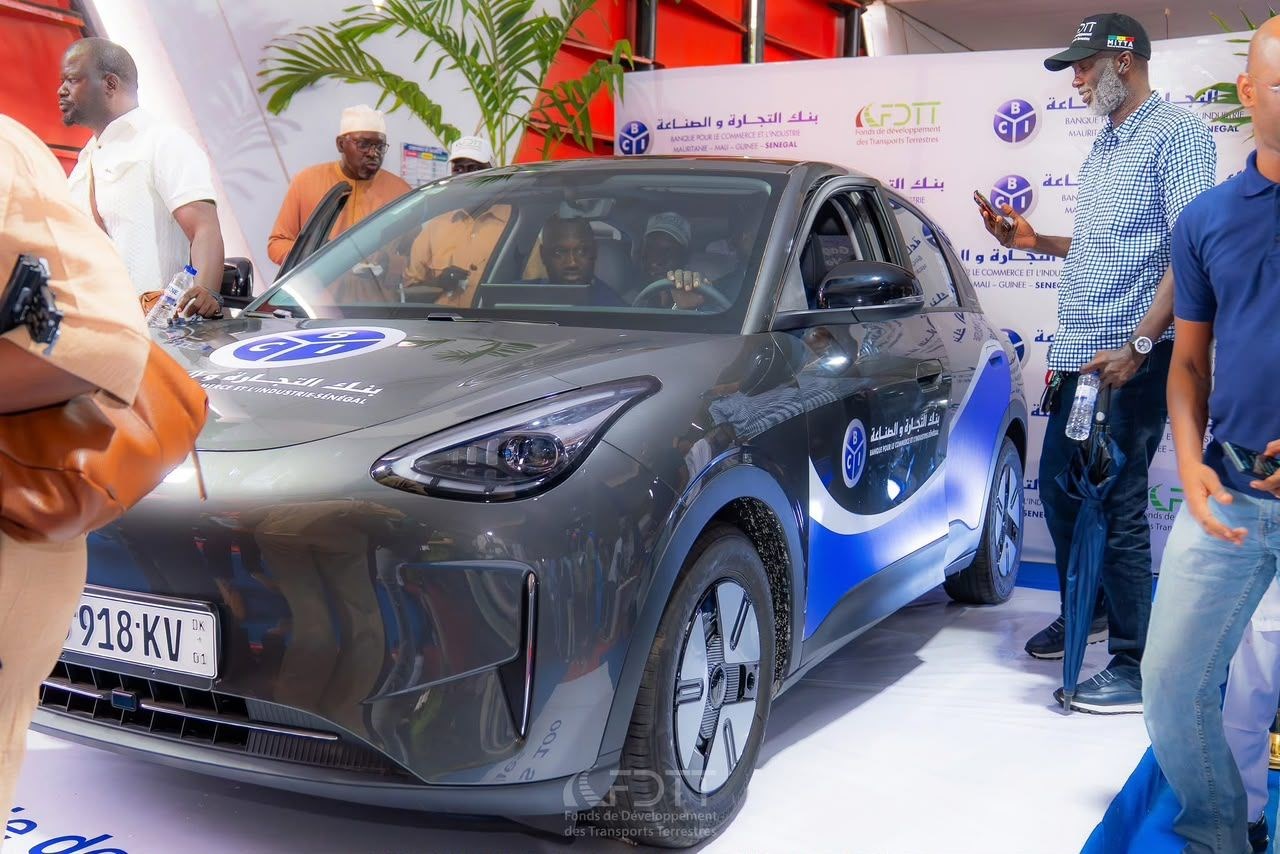
A first batch of 100 vehicles has been received in Dakar. Beyond the renewal of the vehicle fleet, the mechanism aims to test the economic viability of electric mobility and professionalize drivers.
Senegal is initiating a new phase in the modernization of its urban transport with a program focused on the deployment of 1 000 electric taxis. The first 100 vehicles were officially received on Thursday, 24 September 2026, at the International Center for Foreign Trade of Senegal in Dakar.
Supported by the Land Transport Development Fund (FDTT) in partnership with the Banque pour le Commerce et l'Industrie (BCI), the project aims to progressively renew the taxi fleet, improve service quality, and professionalize sector stakeholders. The partners intend to deploy all 1 000 vehicles by 2027.
This initial fleet will also serve as an experimental phase. Partners will monitor, in particular, vehicle range under real traffic conditions, operating and maintenance costs, profitability for drivers, and the availability of charging infrastructure.
"The goal is to experiment, evaluate, and improve when conditions are met, then to gradually scale up," explained Bara Sow, administrator of the FDTT. The Fund intends primarily to act as a financial lever.
By using its resources to guarantee and secure credit, it seeks to reassure banks and attract more private capital toward fleet renewal. The objective is for every franc committed by the State to mobilize additional financing for the benefit of professionals.
The vehicles were manufactured in China. Joint missions of the FDTT and the Directorate General of Road Transport allowed for the examination of the selected models, their manufacturing processes, and their suitability for operating conditions in Senegal.
The program also includes a component dedicated to driver training, particularly in driving, safety, and customer relations. This dimension is intended to accompany the modernization of the vehicles with an improvement in service quality.
For Papa Massal Dièye, Director General of the BCI, the project follows an impact financing logic. Its purpose is not limited to financial profitability: it also consists of improving working conditions for drivers and offering users safer and higher-quality transport services.
Electric taxis complement a Dakar mobility system already strengthened by the Regional Express Train and the Bus Rapid Transit. Their deployment, however, constitutes an important test: it must demonstrate that the expected reduction in fuel expenses can offset the costs of acquisition, maintenance, and vehicle charging.
The success of the program will therefore depend as much on the performance of the cars as on the development of charging stations, the financing model offered to drivers, and the partners' ability to ensure sustainable technical monitoring. Published on 28/09/26 10:36 Mouhamadou Dieng